
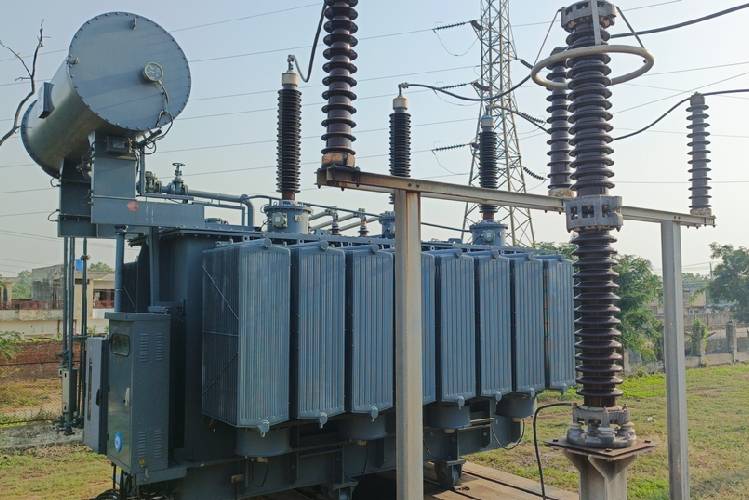
Energy demand no longer moves in a straight line. It rises sharply in some sectors, softens in others, and keeps changing shape as technology, urban growth, and consumption patterns evolve. Behind this constant shift stands a group that rarely gets public attention but carries enormous responsibility. Power transformer manufacturers sit at the center of this change, quietly redesigning how electricity moves, scales, and stabilizes modern systems.
At Jaybee Industries, we see this evolution not as a challenge alone, but as a continuous process of learning, redesigning, and refining. The transformer of today is very different from the transformer of even ten years ago, not because fundamentals changed, but because expectations did.
Understanding how energy demand has changed
Power demand used to be predictable. Large industries consumed steady loads. Cities grew at a measured pace. Grid expansion followed long planning cycles.
That pattern no longer holds.
Today’s demand is shaped by:
- Rapid urbanization and vertical construction
- Renewable energy integration
- Electrification of transport
- Data-heavy commercial spaces
- Variable industrial load cycles
Transformers must now handle fluctuation as gracefully as they handle capacity.
Design flexibility has become essential
One of the first adaptations lies in design philosophy. Transformers are no longer built only for rated capacity. They are built for behavior.
Modern designs consider:
- Load variation over time
- Frequent peak and dip cycles
- Higher harmonic content
- Space and installation constraints
As manufacturers of power transformers, the focus has shifted toward application-driven engineering rather than standard templates.
Materials and core technology evolution
Efficiency expectations are tighter. Loss reduction is no longer optional. Core material selection, lamination techniques, and magnetic path design play a larger role than ever.
Key areas of focus include:
- Reduced no-load and load losses
- Improved thermal performance
- Better insulation life under stress
These improvements allow transformers to operate reliably even as demand patterns shift unpredictably.
Adapting to renewable and hybrid grids
Renewable energy does not behave like conventional generation. Solar and wind introduce variability at the source itself. Transformers must now manage reverse power flow, frequent voltage changes, and intermittent loading.
This has led to:
- Enhanced tap changer design
- Improved insulation coordination
- Better short-circuit withstand capability
For us at Jaybee Industries, this means designing transformers that support grid flexibility without compromising stability.
Manufacturing precision as a response to complexity
As demand patterns grow complex, tolerance for manufacturing variation shrinks. Precision has become a form of adaptation.
Manufacturing priorities today
- Tight control over winding geometry
- Consistent core assembly practices
- Advanced testing beyond routine checks
- Documentation aligned with real operating conditions
Among power transformer manufacturers in India, those who invest in disciplined processes are better positioned to meet modern demand without frequent field issues.
Compact designs for space-constrained environments
Urban infrastructure leaves little room for bulky equipment. Transformers must now fit into basements, rooftops, and compact substations.
This has driven innovation in:
- Cooling system optimization
- Reduced footprint designs
- Noise control techniques
The goal is to deliver high performance without demanding more space.
Matching transformers to sector-specific needs
Different sectors pull energy in different ways. A hospital does not behave like a manufacturing plant. A data center does not load power the same way as a mall.
Modern transformer design increasingly reflects this reality.
| Sector | Key Demand Trait | Transformer Adaptation |
| Industrial | Load fluctuation | Thermal margin focus |
| Commercial | Power quality | Low noise, low loss |
| Infrastructure | Continuous duty | Long insulation life |
| Entertainment | Sensitive loads | Stable voltage design |
These distinctions guide everything from core sizing to cooling choice.
Testing standards rising with expectations
As energy systems become critical to daily life, testing standards rise quietly but firmly. Routine tests alone no longer inspire confidence.
Advanced manufacturers now emphasize:
- Temperature rise testing
- Impulse testing
- Partial discharge analysis
- Sound level verification
This shift ensures transformers behave as expected, not just in theory but in operation.
Service support as part of adaptation
Adaptation does not stop at dispatch. Changing energy demand means transformers operate under evolving conditions over decades.
At Jaybee Industries, we treat service support as part of manufacturing responsibility. Guidance on loading, monitoring, and maintenance helps clients adapt alongside their equipment rather than replace it prematurely.
The human side of engineering change
Behind every design update sits experience. Engineers observe failures, hear client concerns, and adjust assumptions. That feedback loop is where real adaptation happens.
It is rarely dramatic. Often it is incremental. A slightly thicker insulation layer. A revised cooling duct. A tighter tolerance. Over time, these small changes define reliability.
Conclusion
Energy demand will continue to evolve, sometimes gradually, sometimes abruptly. Power transformer manufacturers who adapt through design insight, manufacturing discipline, and long-term thinking make that evolution manageable.
At Jaybee Industries, we align transformer performance with how power is actually consumed, not how it is ideally drawn on paper. This approach allows us to serve varied applications, from heavy infrastructure to specialized needs such as a transformer for cinema hall, where power quality and reliability matter just as much as capacity.
FAQs
Q. Why must power transformer design evolve with energy demand?
Energy consumption patterns change due to renewables, urban growth, and digital infrastructure. Transformers must adapt to handle fluctuating loads, voltage variations, and higher efficiency expectations without compromising reliability.
Q. How do modern manufacturers improve transformer efficiency?
They focus on better core materials, optimized winding design, and reduced losses. Precision manufacturing and advanced testing ensure efficiency gains are sustained throughout the transformer’s service life.
Q. What role does testing play in adapting to new energy demands?
Advanced testing simulates real operating conditions. It helps confirm that transformers can withstand thermal stress, electrical surges, and long-term loading patterns common in modern power systems.
Q. How does Jaybee Industries approach changing power requirements?
We combine application-specific design, disciplined manufacturing, and service support. This ensures our transformers remain reliable as client energy needs evolve over time.
Also Read:-
How Large Power Transformer Manufacturers Are Meeting Global Electrification Demands
Why The Right Power Transformer Supplier Is Key To Hydrogen Energy Scaling